DIALOGUE ON EVIDENCE-LED FOOD SYSTEMS TRANSFORMATION POLICIES IN THE CONTEXT OF VIKSIT BHARAT
About the Event
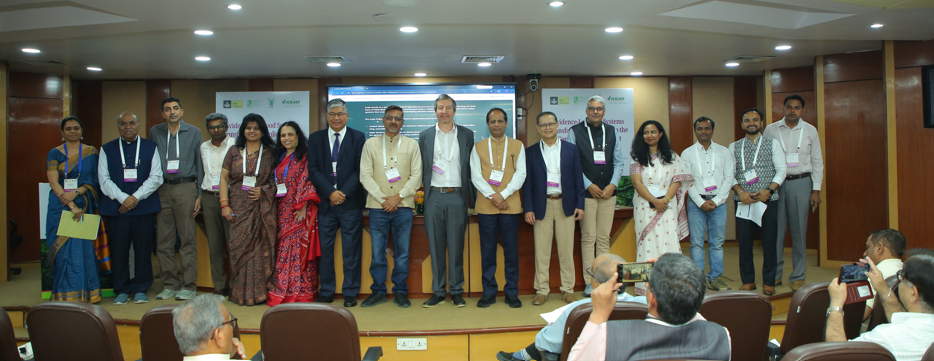
On 7th April 2026, senior policymakers, economists, scientists and development partners came together in New Delhi for a high-level dialogue on “Evidence-Led Food Systems Transformation Policies in the Context of Viksit Bharat.” The event was jointly organized by the International Food Policy Research Institute (IFPRI) and the International Crops Research Institute for the Semi-Arid Tropics (ICRISAT), in collaboration with the Indian Council of Agricultural Research (ICAR), under the CGIAR Science Program on Policy Innovations. The dialogue focused on how evidence, data and partnerships can help India build more resilient, productive and nutrition-sensitive food systems in line with the vision of Viksit Bharat.
The program explored key drivers shaping India’s food systems, including price policies, climate change, and trade dynamics, alongside state-level roadmaps and commodity-focused insights from CGIAR research centers and partner institutions.
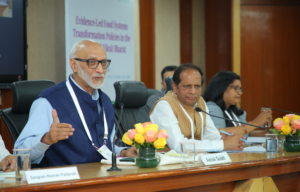
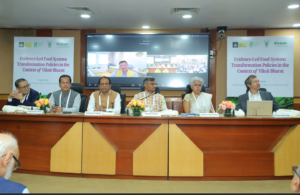
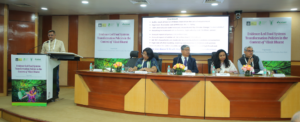
The consultation represents the first dialogue in what may evolve as a structured and consultative process focused on the “how” of food systems governance. Rather than revisiting the rationale for integrated approaches, the dialogue draws on national and international experiences in strengthening cross-sector coordination and deliberate on the principles and institutional mechanisms that could guide India’s approach to systems-oriented governance. The exchange was further enriched by contributions from representatives of international organizations, research institutions, industry bodies, and independent policy professionals.
A key highlight of the event was the launch of the India Policy Innovation Hub, a collaborative platform designed to strengthen engagement between researchers, policymakers, and development partners to accelerate the translation of data, analytics, and field evidence into actionable policy solutions.