DIGITAL AGRICULTURE AND FOOD SYSTEMS TRANSFORMATION: AI, EVIDENCE AND PARTNERSHIPS FOR SUSTAINABILITY, RESILIENCE AND INCLUSION
Jointly organized by the International Food Policy Research Institute (IFPRI), the International Crops Research Institute for the Semi-Arid Tropics (ICRISAT), and the CGIAR Science Program on Policy Innovations at the AERA Regional Seminar.
About the Event
As India advances its Digital Agriculture Mission and strengthens its Digital Public Infrastructure for agriculture, there is a growing need to examine how digital innovations, artificial intelligence, data systems, and evidence-based policymaking can contribute to more productive, climate-resilient, and inclusive agri-food systems.
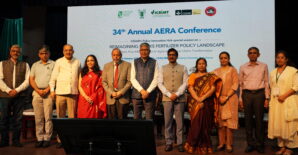
Given this context, The International Food Policy Research Institute (IFPRI), the International Crops Research Institute for the Semi-Arid Tropics (ICRISAT), and the CGIAR Science Program on Policy Innovations jointly organized a Panel Discussion titled “Digital Agriculture and Food Systems Transformation: AI, Evidence and Partnerships for Sustainability, Resilience and Inclusion” at the Agricultural Economics Research Association (AERA) Regional Seminar on 17 June 2026 in Bangaluru.
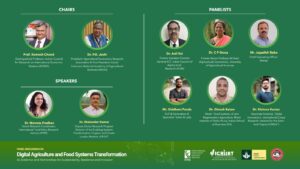
The discussion centered on the opportunities and challenges of using artificial intelligence (AI) and digital technologies to transform agriculture and food systems in India. The panelists emphasized that agriculture should not be viewed merely through the lens of productivity and yields. Instead, future agricultural systems must balance productivity with sustainability, resilience, environmental stewardship, and farmer welfare. Technological innovations, including AI, should therefore support broader food systems transformation rather than simply increasing production.
A recurring theme was the need to move beyond fragmented digital agriculture pilots and focus on solutions that can operate on scale. India’s agricultural landscape is characterized by smallholder farmers, fragmented landholdings, diverse agro-climatic conditions, and varying levels of digital literacy. Any digital solution must therefore be inclusive, accessible, and grounded in local realities.
Key Discussion Themes
- Digital public infrastructure for agriculture: AgriStack, farmer IDs, crop-sown registries, digital crop surveys, soil information, and decision-support platforms.
- AI and data-driven decision support: machine learning, large language models, remote sensing, crop modelling, climate analytics, and advisory intelligence layers.
- From advisory to action: integrating digital advisories with extension systems, FPOs, agri-input networks, state platforms, and last-mile delivery channels.
- Evidence, economics, and impact: measuring adoption, returns to farmers, inclusion outcomes, risks, cost-effectiveness, and institutional readiness for scale.
- Climate resilience and early warning: digital climate services, localized risk analytics, drought and heat-stress preparedness, and anticipatory action for agriculture.
- Private-sector and start-up innovation: responsible AI systems, scalable platforms, interoperability, and partnership models with public research and government systems.
- Inclusion and governance: digital literacy, gender responsiveness, farmer consent, privacy, responsible data use, transparency, and accountability.