DELIVERING FOR NUTRITION IN SOUTH ASIA: TOWARDS IMPACT AT SCALE – CONFERENCE REFLECTIONS
Delivering for Nutrition in South Asia: Towards Impact at Scale: Conference Reflections
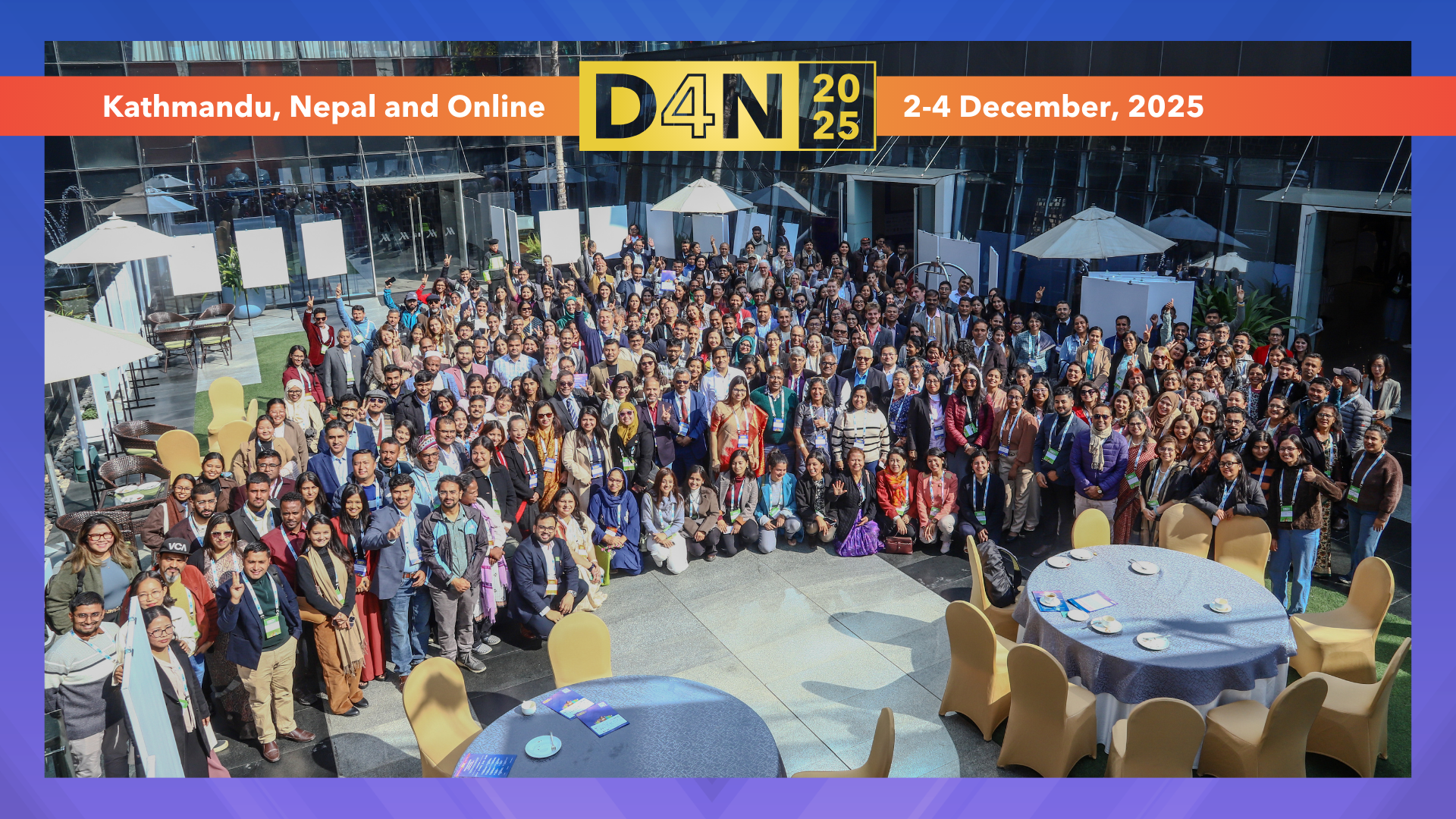
From December 2–4, 2025, IFPRI, CGIAR, and a consortium of 33 co-hosts convened the Delivering for Nutrition in South Asia 2025: Towards Impact at Scale Conference (D4N2025) in Kathmandu, Nepal and online. The conference brought together over 500 researchers, practitioners, and policymakers from across South Asia and beyond to examine how evidence can be translated into nutrition impact at scale in the region.
Improving Nutrition: Scaling Out, Scaling Up, and Scaling Deep
A core takeaway from D4N2025 was that achieving nutrition impact at scale requires understanding not only what works, but how change spreads, takes hold, and endures––expressed through three interlinked dimensions of scaling: scaling out, by expanding proven approaches across communities and contexts; scaling up, by embedding them within policies, budgets, and systems; and scaling deep, by shaping the behaviors, norms, and institutional mindsets that sustain progress. Together, these dimensions emerged critical for scaling efforts to improve nutrition in South Asia. Data gaps also emerged regarding the evidence needed to strengthen delivery systems, enhance both the coverage and quality of scaled interventions, establish effective models for public–private partnerships to support scaling efforts, and achieve alignment across relevant policies and institutions. Importantly, several presenters and participants emphasized the need to center context, beneficiaries, and communities in efforts to scale interventions.
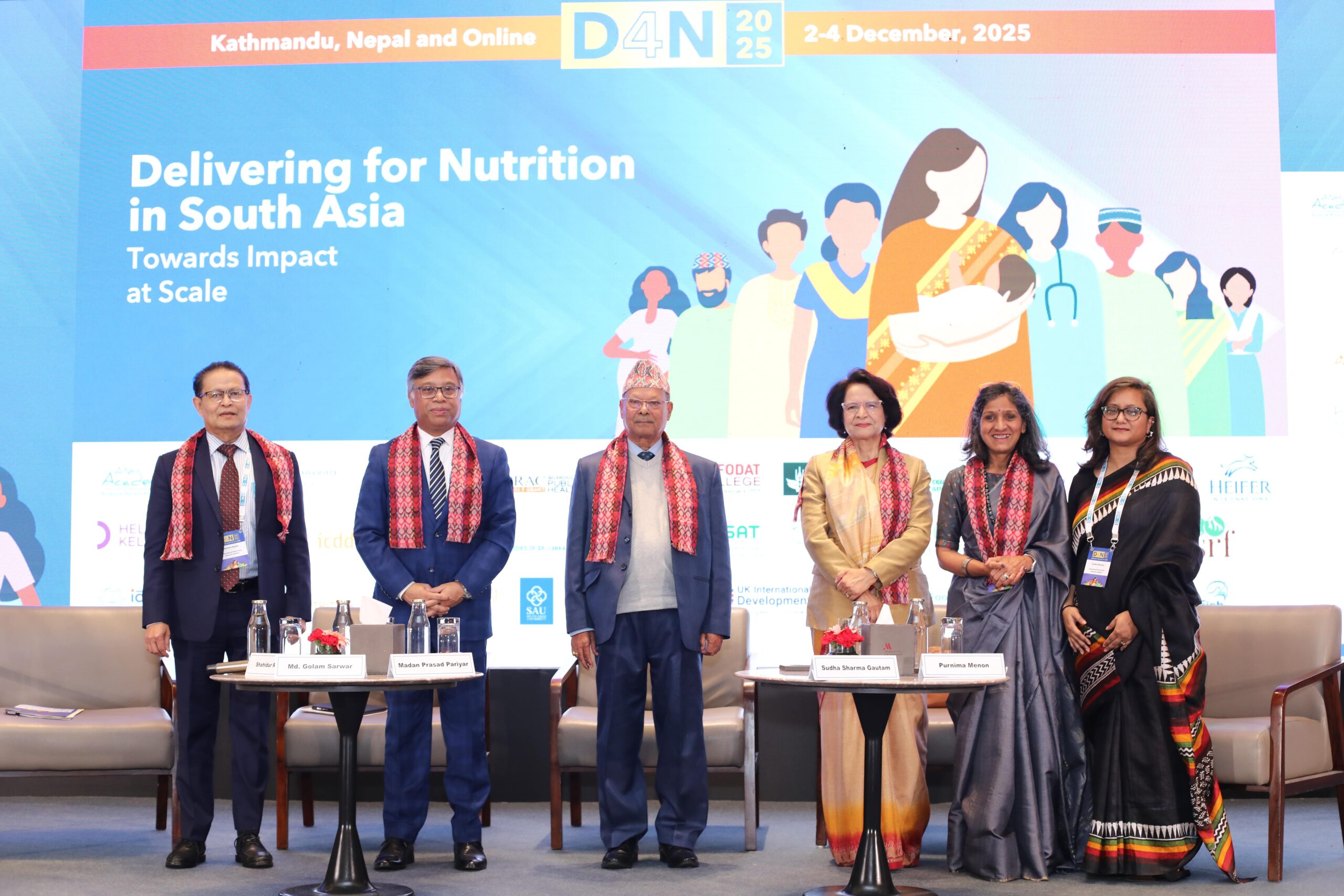
D4N2025 opened by setting a clear, urgent tone for the days ahead. Purnima Menon, Senior Director, Food and Nutrition Policy, IFPRI framed nutrition challenges within a rapidly changing climate and food environment, calling for systems-level innovation and scaling solutions that have proven regional and global impact. Reflections from Chief Guests from the Government of Nepal, including the Minister of Health and Population Sudha Sharma Gautam and Minister of Agriculture and Livestock Development Madan Prasad Pariyar reinforced that achieving nutrition impact at scale requires coordinated, multisectoral action.
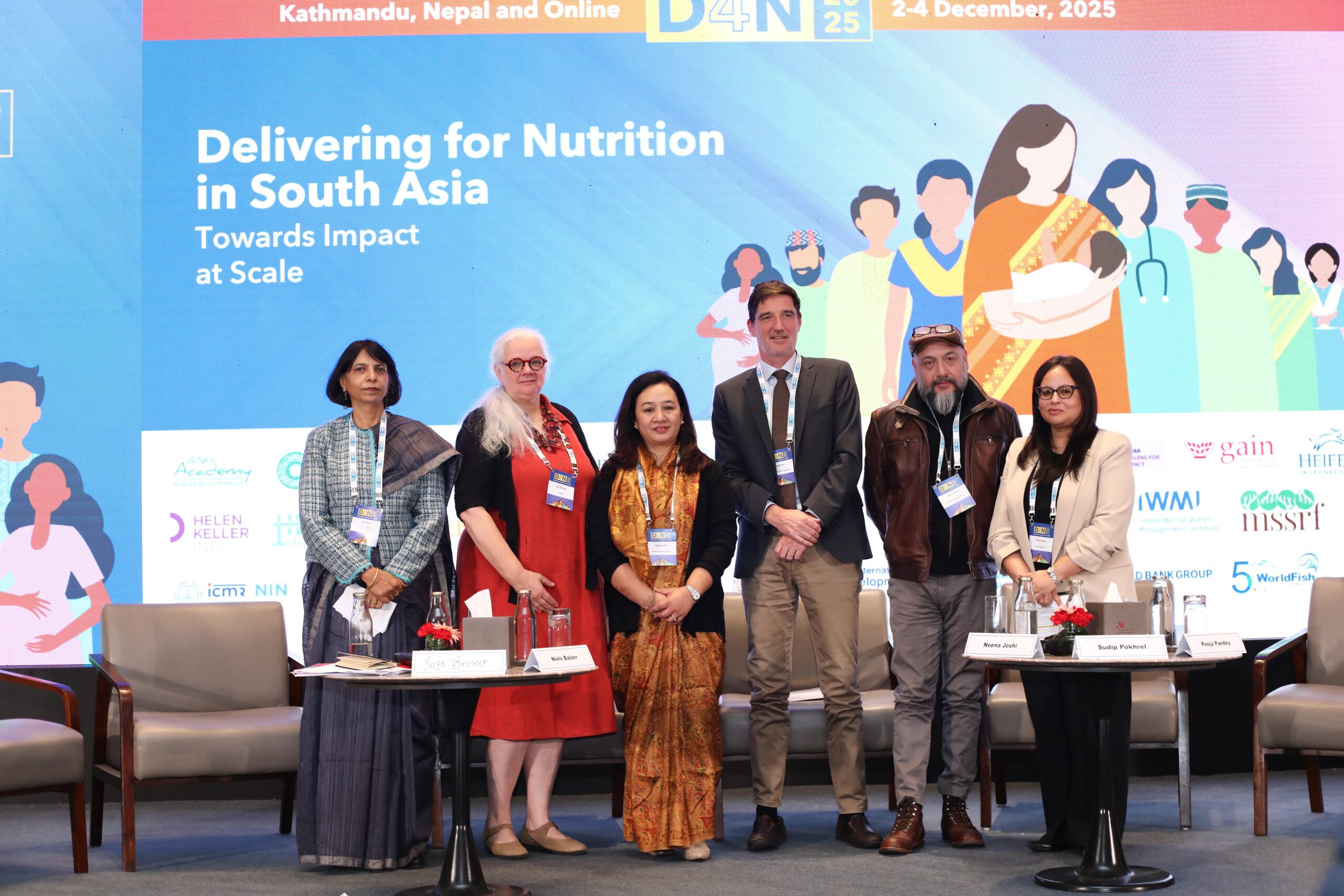
A policy and practice panel on scaling featuring representatives from Eleanor Crook Foundation, Helen Keller Intl, UN World Food Programme, and Heifer International provided different vantage points on scaling nutrition interventions through policy alignment, delivery systems, and market- and community-based approaches, drawing on practical examples from Nepal and the region.
Stunting Reduction as a Systems Challenge
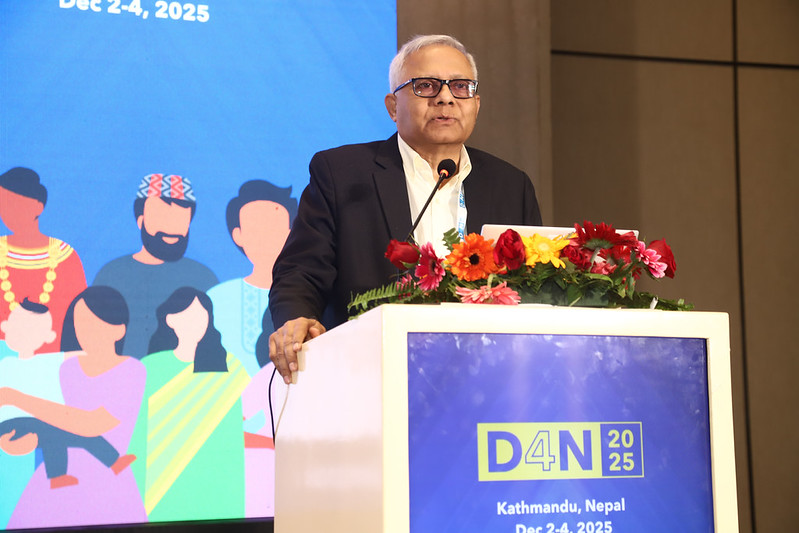
To draw on regional scaling experiences, keynote speaker Tahmeed Ahmed, Executive Director, icddr,b highlighted Bangladesh’s progress in reducing stunting, offering concrete, sustained, multisectoral actions and describing how system-level alignment can translate evidence into nutrition impact at scale. He framed stunting reduction as a challenge of scaling systems, not food supply, arguing that durable progress depends on people’s entitlement to nutrition through poverty reduction, WASH, maternal health, education, and effective governance.
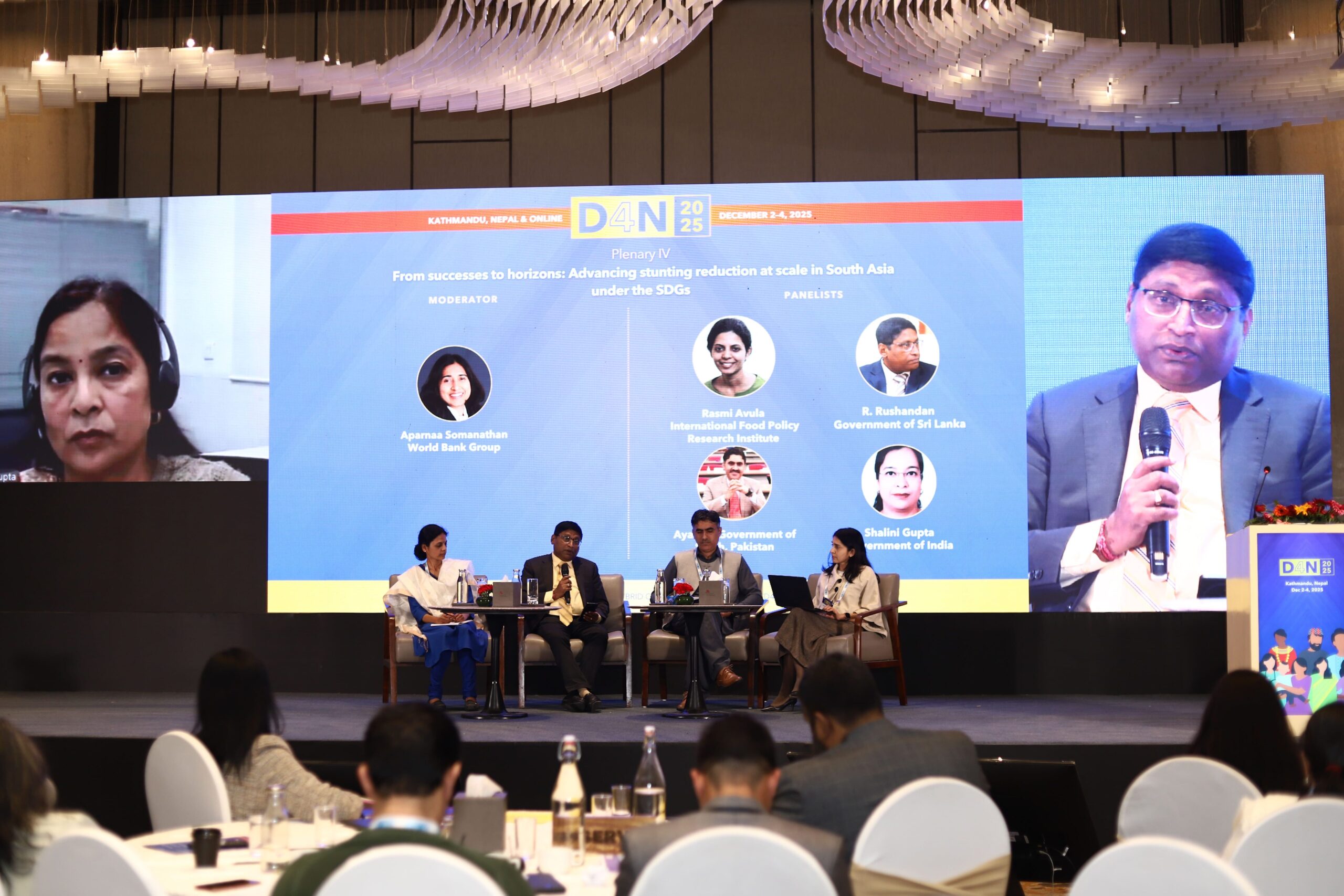
A World Bank-organized plenary reinforced that stunting is not just a health issue, but a broader development challenge. Evidence presented by IFPRI’s Rasmi Avula showed that around half of stunting reduction in South Asia has come from gains in parental education, poverty reduction, and WASH, while around 20% of children are already stunted at or soon after birth and many countries still fall short of ≥90% coverage for essential services. Shalini Gupta from the Government of India attributed India’s reductions in stunting to strong political leadership, expanded national programs, and real-time digital monitoring. Representatives from the Governments of Pakistan and Sri Lanka—Ayaz Ali and R. Rushadan, respectively—reinforced that policy and systems choices are central to nutrition outcomes, highlighting the roles of sustained public investment, digitized data systems, and decentralized, adequately financed programs in accelerating stunting reduction. Together, their remarks underscored that meaningful progress on stunting depends on political leadership, adequate financing, and the capacity of systems to deliver high-quality interventions early and at scale.
Against the backdrop of profound global challenges and uncertainty facing the nutrition and development community, Suneetha Kadiyala, London School of Hygiene & Tropical Medicine and ANH Academy, shared insights from her research journey, emphasizing the value of working across disciplines and systems, investing in relationships and trust, embracing methodological innovation, and recognizing that lasting impact depends as much on people, partnerships, and persistence as on individual studies or interventions.
D4N2025 attracted over 500 abstract submissions from across South Asia, with about 100 accepted. The abstract-based presentations highlighted several cross-cutting themes over the three days:
- Nutrition challenges begin early and accumulate over the life course. Evidence underscored that stunting and other forms of malnutrition start in early life, making timely, sustained interventions critical for long-term impact.
- Systems—not single interventions—drive lasting nutrition gains. Durable progress depends on coordinated action across health, agriculture, social protection, WASH, and education, highlighting that scaling requires institutionalization within existing systems.
- Food environments strongly shape diets and nutrition outcomes. Affordability, market incentives, and food system design often matter more than individual choice, pointing to the need for policy and market reforms that operate at scale.
- Data and digital tools can improve delivery and accountability. Predictive analytics, real-time monitoring, and improved data systems are strengthening targeting and responsiveness, while raising new governance considerations.
- Community ownership and political commitment enable scale. Sustained nutrition impact requires local engagement, behavior change, and leadership across sectors to translate evidence into action.
Closing Reflections
Biswash Gauchan, Executive Director, Institute for Integrated Development Studies reflected on Nepal’s broader political and fiscal context, noting that development priorities often compete with security concerns, yet sustained partnerships are critical to keeping nutrition high on the policy agenda. His Excellency Indra Mani Pandey, BIMSTEC emphasized that food and nutrition security are shared regional challenges, calling for stronger cooperation across South Asia and highlighting D4N’s role in connecting policymakers, researchers, and institutions.
The Strength of Partnerships
A key component of the development and implementation of D4N is the extensive partnerships forged among regional and global co‑hosts who come together annually to advance the conference’s vision—a point underscored in the closing session. The 33 co-hosts, along with many others from the scientific, policy and civil society nutrition community, supported with program development, logistics, abstract review, moderation, and funding.
Expanding the D4N Platform
Looking ahead, we plan to continue to hold the annual D4N conference, while also expanding it into a year-round platform for learning, mentorship, and leadership. Building on the energy of the conference, the platform aims to support early- and mid-career professionals and policymakers with sustained opportunities to strengthen research quality, communicate evidence effectively, and engage in real decision-making spaces. The goal is simple but ambitious: to nurture a pipeline of nutrition leaders who can translate evidence into impact across South Asia. We are also exploring replicating the D4N platform in other regions and invite interested partners to work with us to adapt and lead it locally.
D4N2025 was convened by a consortium of co-hosts and made possible through the generous support of several funders.
D4N2025 CO-HOSTS
D4N2025 FUNDERS

Conference Resources
Conference materials are available on the Delivering for Nutrition website.
Contact
For more information on the D4N platform or to explore expanding it to your region, please contact IFPRI-D4N-CONF@cgiar.org.