MAKING GENDER COUNT: BUILDING EVIDENCE-BASED AGRICULTURAL POLICIES IN ODISHA
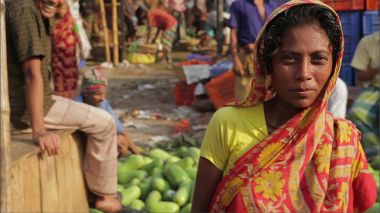
Women sustain agri-food systems making up 42 % of the global agri-food systems workforce, and agri-food systems sustain women depending on them for their livelihoods (FAO, 2026). This is a relationship of mutual interdependence. Odisha is no different to this trend. In fact, 54% of the agricultural workforce in Odisha is women. Recognizing this central role of women, the state has implemented multipronged strategies to reach, benefit and empower them. These include expansion and strengthening of self-help groups' network, gender-focused programs and policies and improved financial inclusion. At present, the state administers 85 schemes exclusively for women, 420 gender-sensitive programs, with a gender budget accounting for nearly 45% of state expenditure.
However, having special programs and policies and allocation of financial resources may not automatically translate into improved gender equity . While enhanced subsidy provision is necessary to level up the playing field, it may not be sufficient to address the significant barriers faced during implementation and uptake. In addition, the prevailing monitoring frameworks tend to assess policy success primarily through output-based indicators, such as the number of beneficiaries reached or the amount of subsidies disbursed, rather than the outcomes achieved because of these investments. Beneficiary data is often not gender- disaggregated, limiting the extent to which outcomes can be measured and used to inform existing or new policies.
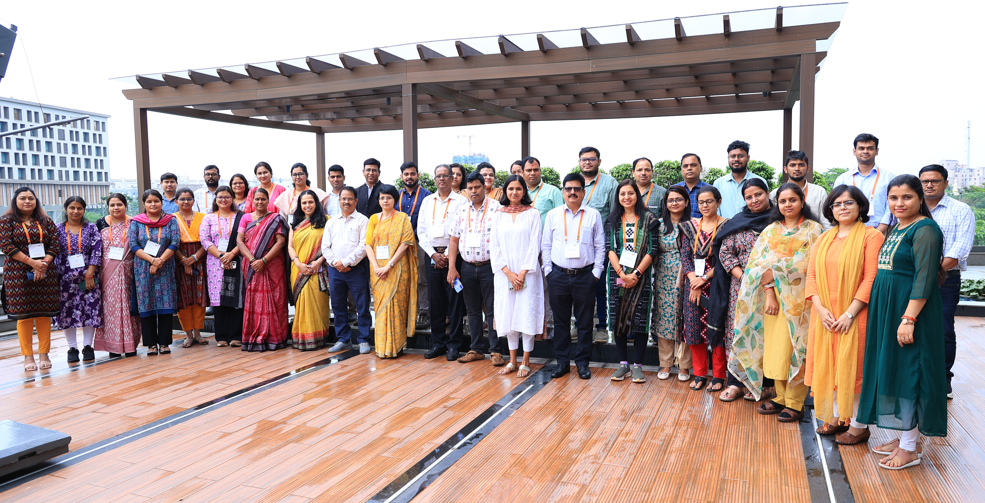
Recognizing the need to strengthen gender integration in agricultural policies, the newly constituted Gender Responsive Cell (GRC) in the Department of Agriculture and Farmer’s Empowerment (DA&FE), led by the International Food Policy Research Institute (IFPRI) , supported by the Gates Foundation has been working closely with the government to address this. As part of this effort, the GRC, in collaboration with CGIAR Gender Equality and Inclusion Accelerator organized a two-day Capacity Partnership Workshop on “Gender-Responsive Agricultural Policy and Data Systems” in Bhubaneswar on June 22–23, 2026. The program was intentionally framed as a Capacity Partnership rather than a conventional capacity-building initiative. The approach reflected the simple idea that meaningful policy solutions emerge through continuous dialogue and shared learning between researchers.
Addressing these challenges requires strengthening institutional capacity and using gender-disaggregated evidence throughout the policy process so that agricultural policies better reflect the realities faced by women farmers.
The workshop brought together senior representatives from the Department of Agriculture & Farmers' Empowerment (DA&FE), Department of Women and Child Development (WCD), Department of Mission Shakti (MS), Fisheries and Animal Resources Development Department (FARD), ICAR–Central Institute for Women in Agriculture (CIWA), and partner institutions to strengthen capacities for designing and implementing more gender-responsive agricultural policies and data systems.
Speaking on the occasion, Commissioner cum Secretary Sri Sachin Ramchandra Jadhav (IAS) highlighted that "The challenge is not merely cultural. It requires a paradigm shift in policymaking and administration," underscoring the need for robust data systems and gender-responsive governance to ensure women's roles, contributions, and challenges are adequately factored in while formulating agricultural policies in Odisha. Shri Shubhranshu Mishra (OAS) emphasized the importance of strengthening positive outcomes for women through data-driven and inclusive policy interventions.
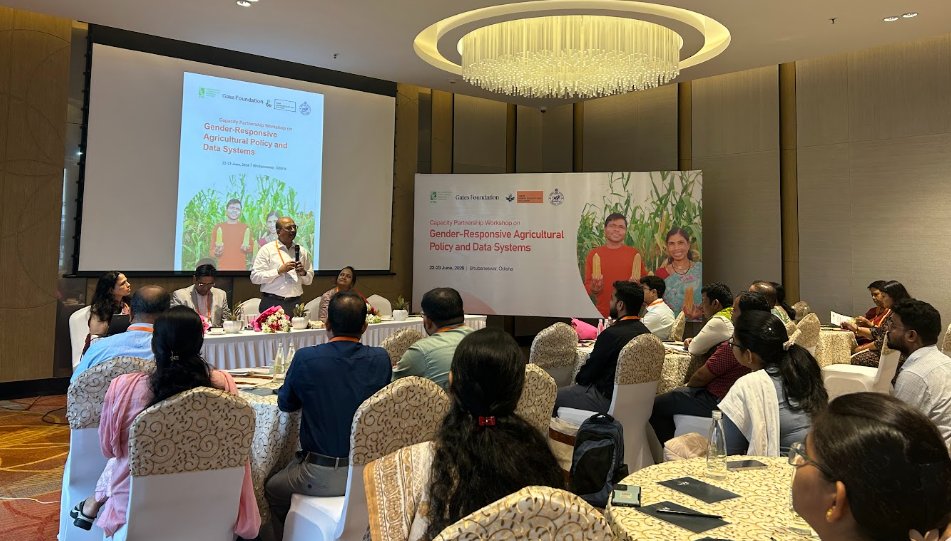
The workshop underscored the importance of the status of women in agri-food systems and how it has been evolving, highlighted the existing policies that support women, followed by a discussion of how the schemes or allocation should be budgeted, and finally on data collection to monitor and improve the implementation of existing schemes.
Embedding Gender in Agricultural Policy
Dr. Ranjitha Puskur (Principal Scientist, International Rice Research Institute (IRRI), in her session, emphasized that women are at the heart of agrifood systems, yet their contributions often remain undervalued, and their needs overlooked in policy and programming. She demonstrated why gender-responsive agricultural policy is not only a matter of equity but also of effectiveness. The session explored women's multiple roles across agrifood systems, illustrated how seemingly neutral policies can unintentionally exclude women, and highlighted practical frameworks for designing programs that improve women's access, participation, benefits, and empowerment. Participants were introduced to practical approaches for moving from gender-blind (neutral) and gender-intentional interventions to truly gender-responsive policies that remove barriers rather than expecting women to overcome them.
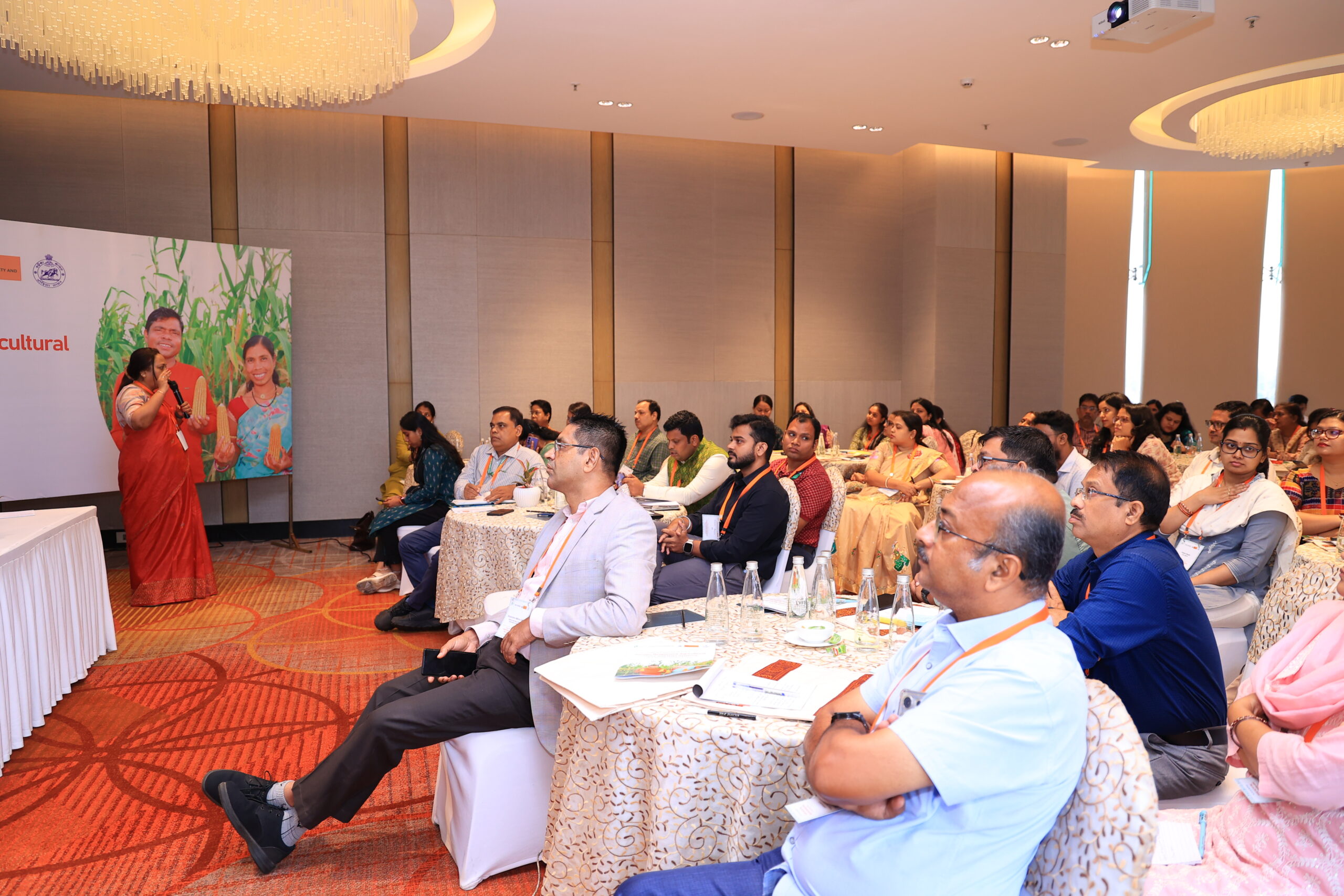
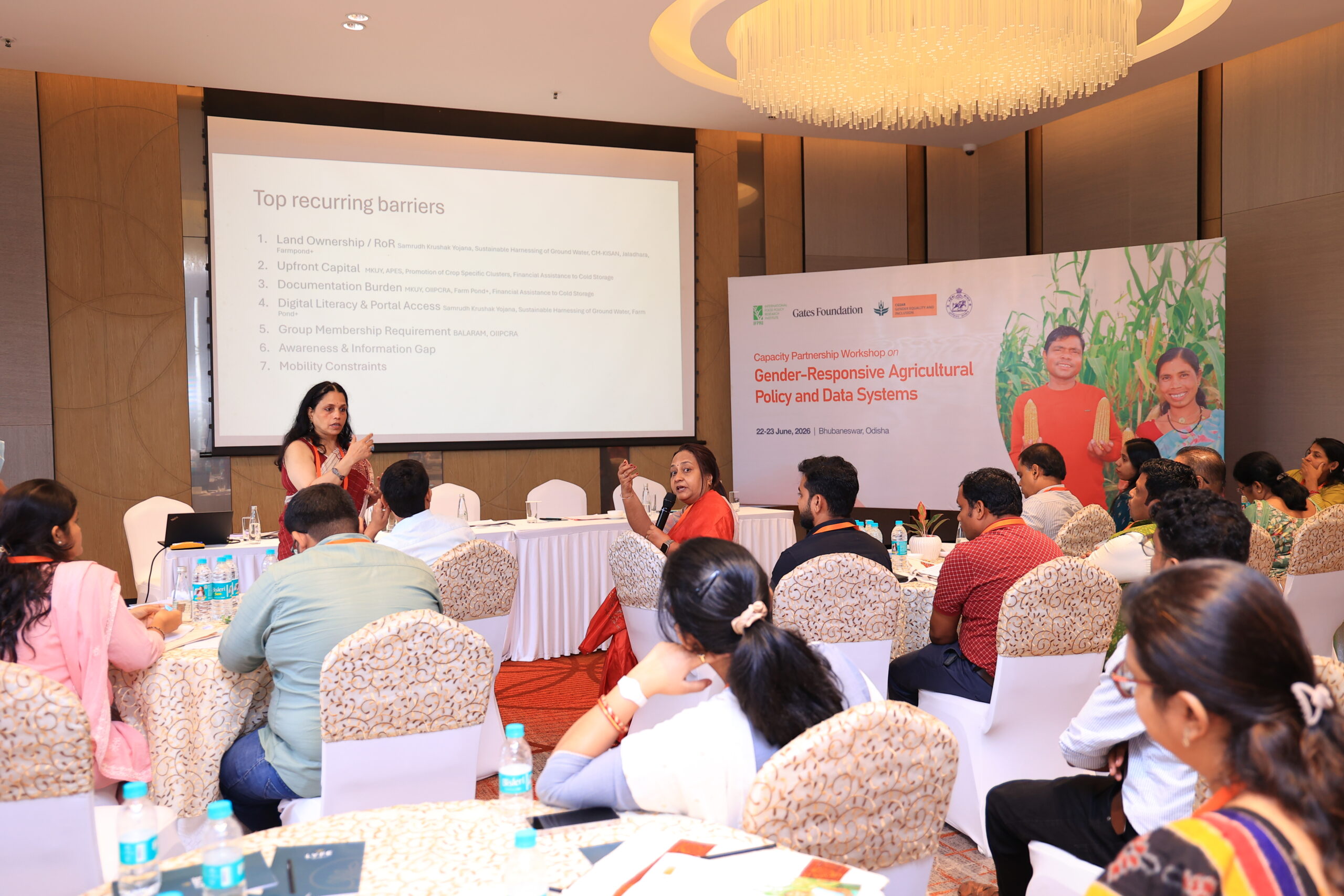
A key message was that better gender data lead to better policies and better development outcomes. Interactive exercises encouraged the participants to critically examine the existing agricultural schemes and identify opportunities to better address gender disparities. Ms. Bhumika Mishra from IFPRI, continuing the discussions, presented a comprehensive landscape analysis of schemes being implemented by DA&FE. She presented a diagnostic framework that traces the pathway a woman farmer would need to follow to access each benefit and asks what she would encounter or must fulfill at each step.
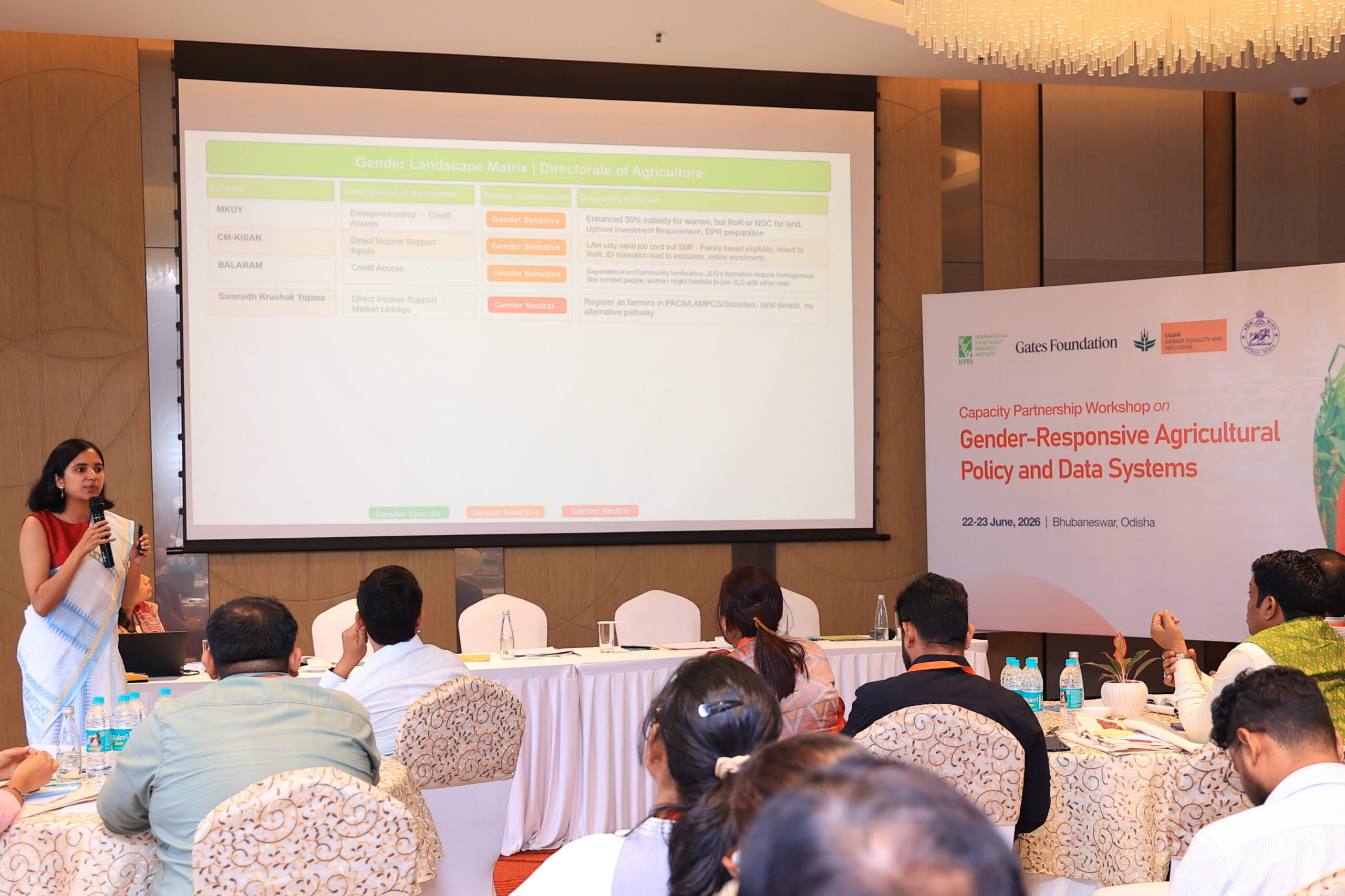
The framework consists of five steps (Figure 1): (1) Building a cross-directorate inventory of the schemes implemented by DA&FE, (2) Summarize the assistance and provisions listed in the schemes, (3) Answer each of the following questions: WHO is the target group; WHAT the scheme provides and under what conditions; WHAT are the Pre-Requisites — land, bank account, capital, group membership, documents — a beneficiary must already hold; and HOW the access pathway works step by step. (4) Assign each scheme to one or more of the seven dimensions based on the type of assistance identified in step 2 (Credit, Income, Technology, Entrepreneurship, Inputs, Market Linkage, Knowledge), (5) Based on the pathway analysis — not just the scheme text — classify each scheme as Gender Specific, Gender Sensitive, or Gender Blind. This diagnostic helps identify priority areas for gender-responsive reform, assess existing gaps in how schemes reach women farmers, enabling policymakers to design and implement changes where they are needed most.
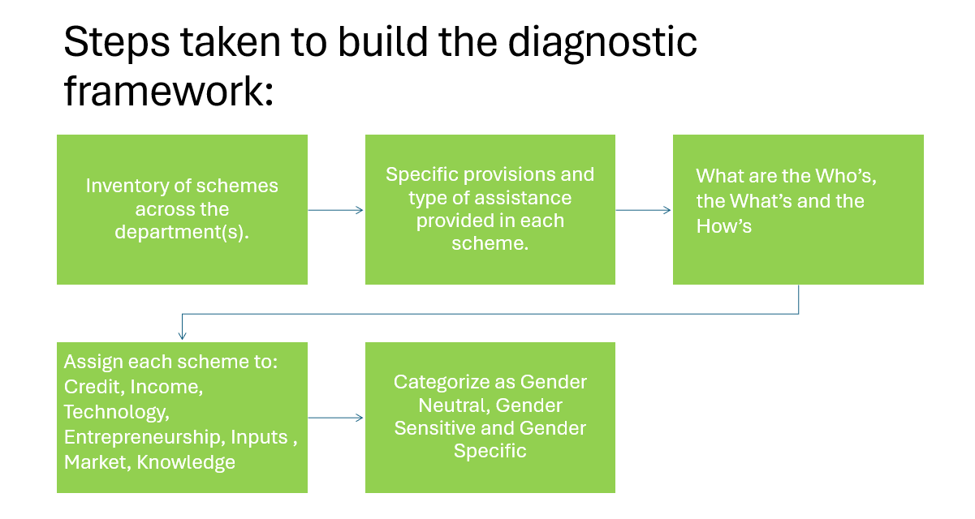
Figure 1 Source: Author’s illustration
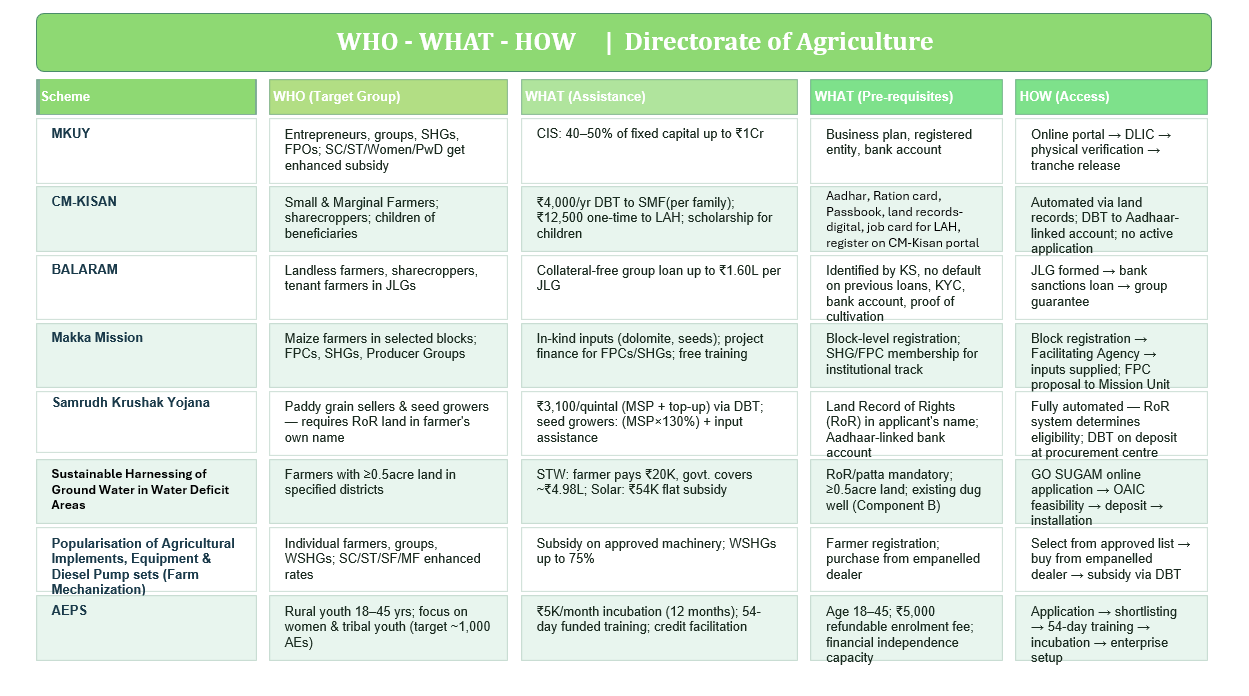
Figure 2: Application of the diagnostic framework for accessing gender-responsiveness of schemes
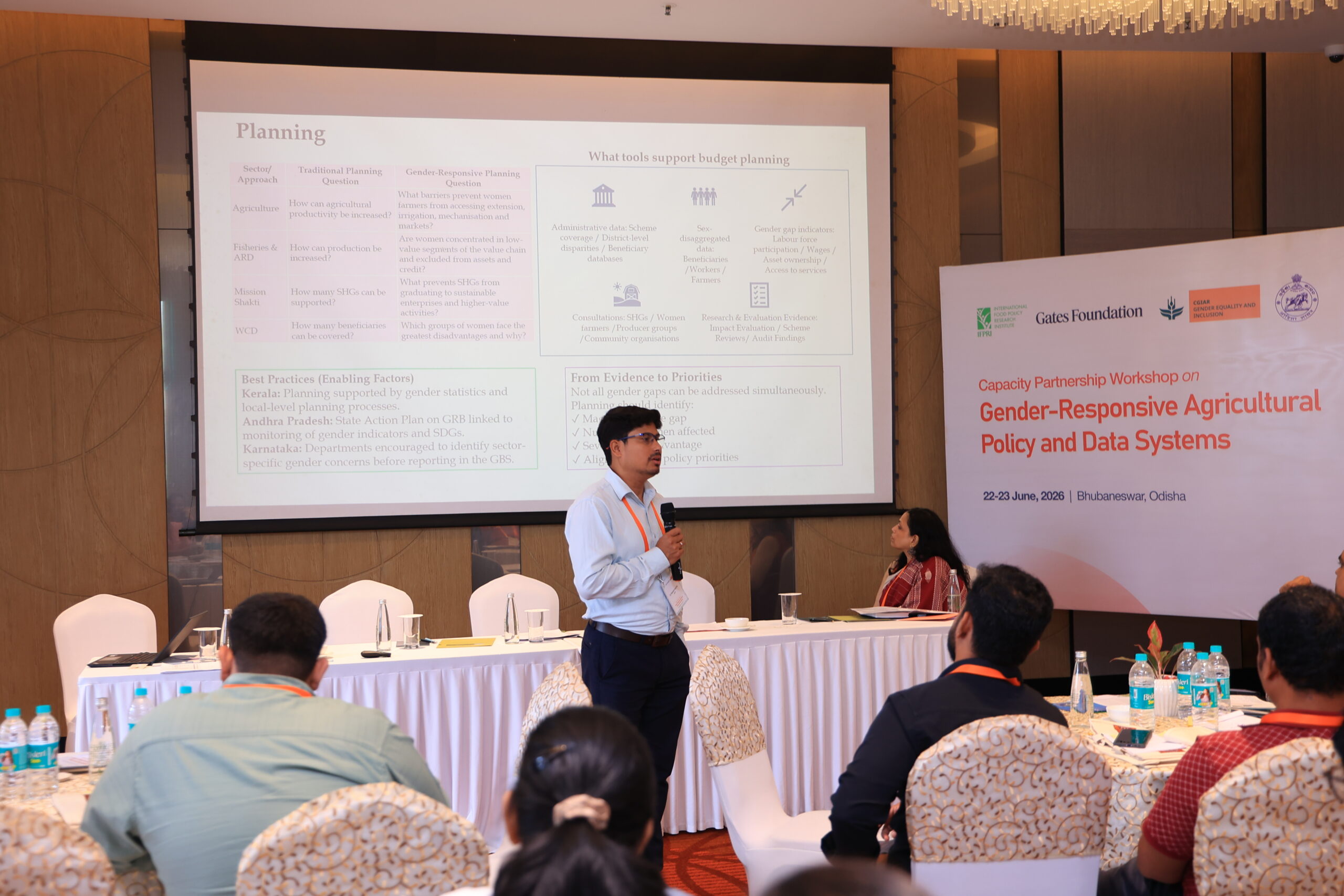
Dr. Bhabesh Hazarika, Economist, National Institute of Public Finance and Policy (NIPFP) shared valuable insights on gender budgeting and gender audits. Moving beyond the conventional focus on earmarking funds for women, he guided the officials through a practical six-step framework for gender-responsive budgeting: identifying gender gaps using sex-disaggregated data, designing the schemes that address specific constraints faced by women, justifying budget allocations based on evidence, ensuring gender-sensitive implementation, systematically monitoring progress through gender-disaggregated indicators, and lastly, evaluating whether interventions actually reduced gender inequalities. Using examples from agricultural sector, he demonstrated how departments can shift from asking "How much was spent?" to the more meaningful question, "What outcomes were achieved for women?"
Why Does Gender-Disaggregated Data Matter?
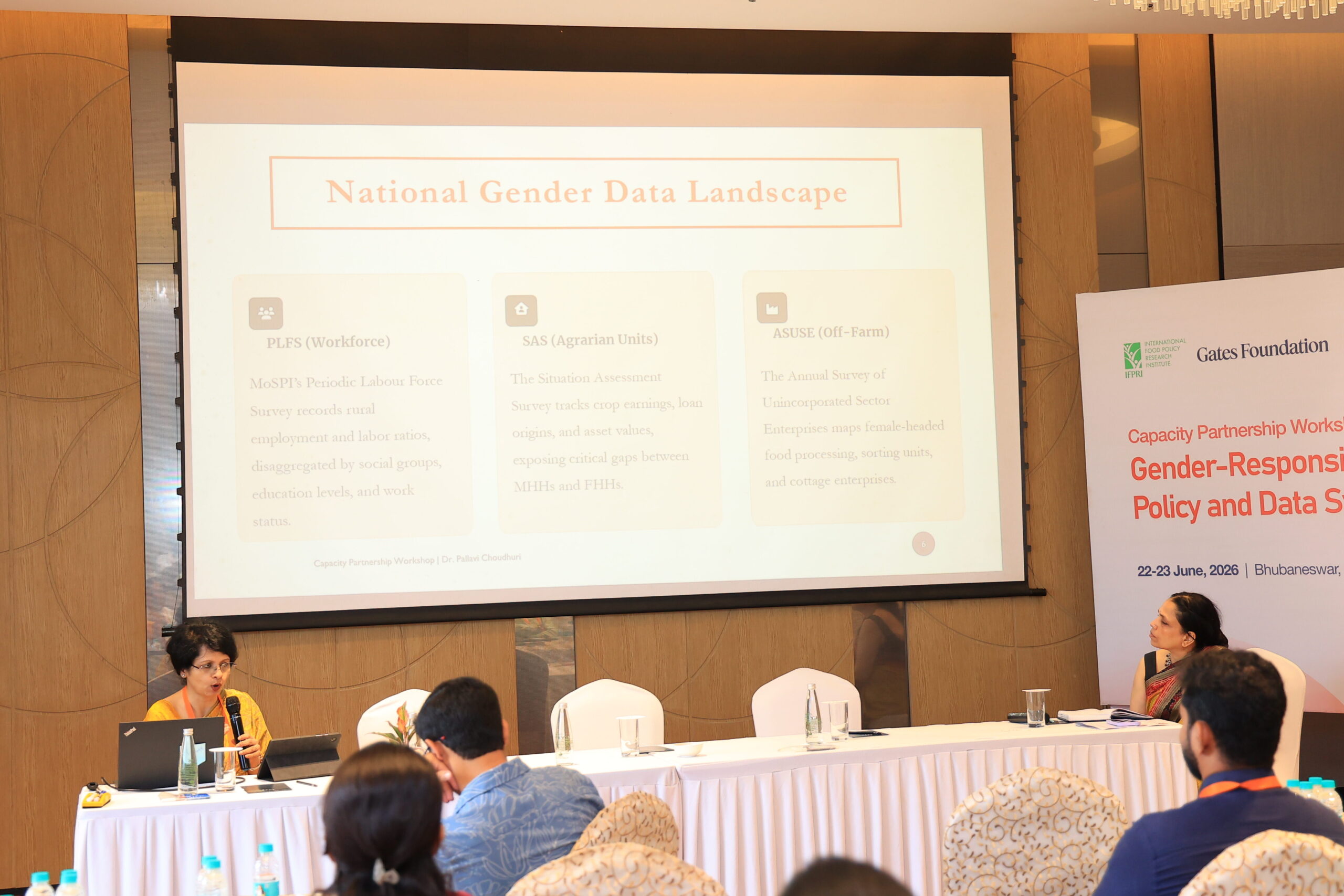
The second day focused on the central role of gender-disaggregated data in designing effective policies. Dr. Pallavi Choudhuri, Senior Fellow and Deputy Director, National Council of Applied Economic Research (NCAER) highlighted that gender-responsive budgeting is only as strong as the data underpinning it. She emphasized the importance of collecting gender-disaggregated data that goes beyond beneficiary counts to capture women's access to resources, services, credit and digital connectivity. She demonstrated this using nationally representative survey datasets, thereby reiterating the need for gender disaggregated data at the scheme level for better beneficiary targeting and evidence-based monitoring. Her session thus reinforced that robust gender-disaggregated data is the foundation of outcome-oriented gender budgeting.
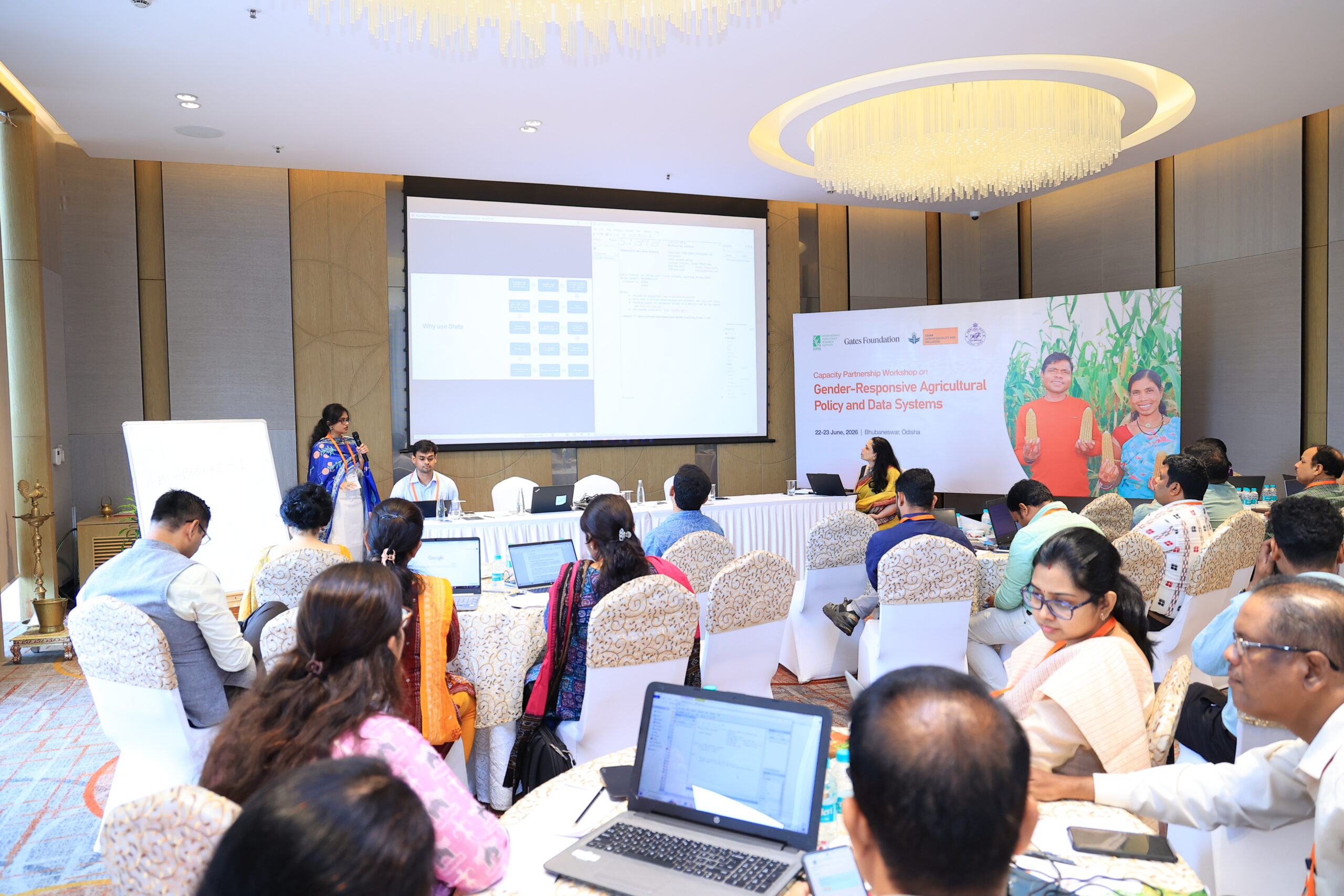
The workshop concluded with a hands-on session on the use of the Annual Survey of Unincorporated Sector Enterprises (ASUSE) 2023–24. The dataset was selected because it captures women's engagement in the rapidly growing post-farmgate segments of the agri-food value chain, providing policymakers with a richer understanding of women's livelihoods beyond agricultural production. By working directly with the data, participants saw how gender-disaggregated evidence can reveal patterns that are often overlooked and support more inclusive policy decisions. Led by IFPRI Research Analysts Bhumika Mishra, Archismita Bose, and Adnaan Shah, Vandana Vidhani, Devendra Kumar and Amit Kumar Burman, the session also introduced participants to the fundamentals of data analysis using Stata, equipping them with practical skills to generate and interpret gender-disaggregated statistics.
Strengthening institutional capacity
The workshop reinforced several important messages for policymakers. Gender-responsive policies improve effectiveness, efficiency, and inclusion, and they can only be effective when they are supported by gender-disaggregated data throughout the policy cycle. The objective of budgeting is to not create separate programs for women, but to address existing gender gaps. Above all, the workshop underscored that sustained collaboration among government departments, researchers, and development partners is essential for building more inclusive, evidence-based agricultural policies.
Acknowledgements
We sincerely thank the senior officials of the Department of Agriculture and Farmers' Empowerment (DA&FE), particularly Dr. Sangram Keshari Pattanaik, Joint Director- Agriculture, DA&FE and Sri Nagendra Kumar Mallik, Deputy Director- Agriculture, DAFE for their guidance and support. We are also grateful to Dr. Mamata Pradhan, Senior Research Coordinator, IFPRI, and Dr. Devesh Roy, Senior Research Fellow, IFPRI, for their valuable insights and contributions to this blog.
Archismita Bose is a Research Analyst in IFPRI; Sri Shubhranshu Mishra is Additional Secretary, Odisha Administrative Services; Dr. Ranjitha Puskur is a Principal Scientist at IRRI; Bhumika Mishra is a Research Analyst at IFPRI. Opinions are of the authors’.