FROM HIDDEN WORKFORCE TO CENTER STAGE: ODISHA’S GENDER RESPONSIVE CELL TAKES ROOT
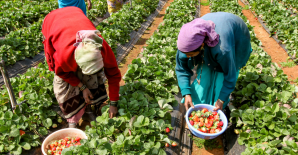
In the past decade, significant progress has been made in Odisha to recognize women’s role in agri-food systems through the expansion of self-help group networks, gender-focused programs and improved financial inclusion. Yet progress remains below the potential. Agrifood systems is a major employer of women. This is pivotal in Odisha where women constitute more than half (54%) of the agricultural workforce. Notwithstanding their important roles, women’s condition remains at subpar levels inter alia due to social norms, and other incumbent barriers to knowledge, resources and assets.
This is incompatible with the new development agenda (shared prosperity, environmental and social responsibility, health and nutrition, reduction of downside risks due to conflict and climate change) compared to the old development agenda that was anchored solely on poverty reduction. The development paradigm requires a broader understanding of contribution of multifunctional nodes (comprising gender) to economic and social change, that forms the rationale for Gender Responsive Cell (GRC). On this front GRC in Odisha is a unique and core system addressing what we need to know as well as what we need to do.
Setting the vision for GRC
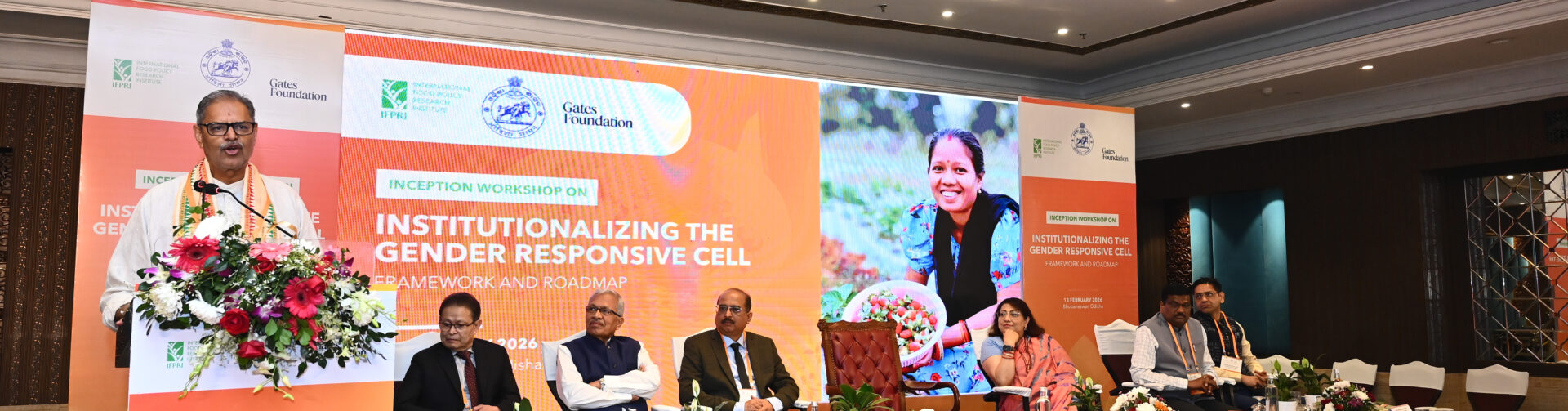
On 13th February 2026, in Bhubaneswar, legislators, academics, researchers, and practitioners gathered to mark the inception of the GRC, a first-of-its-kind institutional mechanism led by the International Food Policy Research Institute (IFPRI) and supported by the Gates Foundation, embedded within the Department of Agriculture and Farmers' Empowerment (DAFE). The raison d'être of GRC is in addressing systemic potential or actual gender inequities in transforming food systems of Odisha which requires the adoption of gender-transformative/responsive approaches (GTAs) (GRAs) in policymaking. Across all Sustainable Development Goals (SDGs), gender equality is not only a standalone goal (SDG 5) but also a cross-cutting issue that affects the success of each of the UN’s six transitions. GRC builds extensive evidence highlighting the crucial intersection of gender equity and food systems in promoting healthy and sustainable outcomes.
GRC builds on the base and leverages the Odisha government’s agenda where there is gender budgeting and plans outlining women led schemes (Economic Survey Odisha 2025-26). The goals of GRC are simple yet ambitious: ensuring gender is the core operational principle and not an afterthought in policymaking and in addressing systemic gaps by embedding gender into planning, budgeting, program design, execution and performance review.
Dr. Mamata Pradhan of IFPRI opened the workshop by setting the stage for the proceedings. “GRC is motivated by the fact that globally, recommendations for healthy, equitable, and sustainable agri-food systems do not tend to be gender responsive,” she highlighted. She was also careful to clarify that the GRC is not a Gender Transformative Cell, but a Gender Responsive one which is more foundational in gender outcomes within financial and institutional boundaries while framing and executing effective policies.
Existing challenges and structural gaps
The inception meeting tended to be predicated on the reality of women constituting 54% of Odisha's agricultural workforce yet owning only 13% of its land. Prof. Pravat Kumar Roul, Vice Chancellor of Odisha University of Agriculture & Technology (OUAT), called them the "hidden workforce". The gap has material consequences for development, especially when land ownership determines access to subsidies, credit, and insurance. The Government of Odisha currently runs 420 gender-sensitive schemes and 85 schemes exclusively for women but as Sri Sachin Ramchandra Jhadav, Commissioner cum Secretary of DAFE, acknowledged, it is not only the intent that matters. There is need for structural changes in how we plan and how we work. Mainstreaming gender disaggregated data is imperative to know whether these schemes are reaching the women they were designed for.
Dr. Mrinalini Darswal, Commissioner cum Secretary, Women and Child Development Department reminded the gathering that women themselves are not a homogeneous group. Identity intersperses with other social matters. A poor, illiterate, scheduled caste woman in rural Odisha may not simply face gender discrimination but these disadvantages get compounded by poverty, caste and geography. Thus, intersectionality must be considered for gender responsive policy to be effective.
Dr. Pallavi Choudhuri of the National Council for Applied Economic Research (NCAER) highlighted the measurement problems on ground where women are frequently not counted as farmers even within their own households. The first step towards institutional change is simply to start counting them because what gets counted gets budgeted. Further, despite the increase in women’s bank accounts and mobile phone ownerships, surveys show very few women operate them implying ineffective ownership. Thus, digital literacy and financial inclusion pose a critical challenge in gender responsiveness or empowerment.
Economic rationale for GRC
Dr. Devesh Roy, Senior Research Fellow at IFPRI, provided economic bases for GRC arguing in the pathways of growth as the precursor to development where development embodies healthy, equitable, sustainable food system. Gender has always been embedded in the pathways from inputs to outputs that drive growth: land, labor, productivity enroute to sustainable, equitable and healthy development. The gender footprint in the impact pathway throughout is what he referred to as gender thoroughfare. Yet gender rarely gets a seat and commensurate attention at the table in the conversation. As part of structural transformation when resources move from low-productivity to high-productivity sectors, overall productivity rises and fosters growth. This structural transformation fails to be viewed with a gender lens. In the development agenda he weighed on placing gender at the centerpiece of this theory of change.
Way Forward
Smt. Somabha Mohanty, from UN-Women, emphasized that GRC should take a long-term view. The GRC work, she said, should not just be about supporting women farmer of today but creating pathways for their daughters to become agripreneurs. Dr. Ranjitha Puskur of IRRI argued that inclusion does not merely mean designing women-only programs it’s about redesigning them so that women can access, benefit and lead.
The workshops discussions converged around few thematic priorities for the GRC: (1) Institutionalizing evidence-based design with systematic collection of gender disaggregated data (2) Integrating gender consideration in agricultural extension services and technology (3) Recognizing women’s time, mobility and care burdens as critical constraints and finally (4) Gender-sensitive budgeting and performance review mechanisms.
No voice captured the spirit of the day more aptly than that of Chief Guest and honorable Deputy Chief Minister of Odisha, Sri Kanak Vardhan Singh Deo. He reminded the gathering that women have been farmers for time immemorial, long before any policy framework existed to recognize them. He invoked Raimati Ghiuria, a tribal woman farmer from Odisha who has spent her life cultivating and conserving indigenous millet varieties and passing down that knowledge to younger generations. Women like her are the backbone of our food system and our policies should meaningfully reflect their role.
Bhumika Mishra is a Research Analyst with IFPRI’s Development Strategies and Governance (DSG) Unit based in Bhubaneswar, Odisha, India, works for the Gender Responsive Cell (GRC), Department of Agriculture and Farmers’ Welfare (DAFE), Government of Odisha (GoO); Vandana Vidhani is a DSG Research Analyst, based in Bhubaneswar, Odisha, part of GRC and Climate Resilience Cell (CRC). Amit Burman, is a Project Coordinator with DSG based in Bhubaneswar, Odisha, works for the GRC and Climate Resilience Cell (CRC).