GENDER RESPONSIVENESS THROUGH LAND RIGHTS
As we approach our SDG goals, one of the core targets is achieving gender equality (SDG-5) which is predicated on equal access to economic resources, land ownership, inheritance, and financial services. It is remarkable that only 13% of global landholders are women and the share is significantly lower in developing countries. In India itself, women form nearly two-thirds of the agricultural workforce, and we repeatedly hear about feminization of agriculture, yet only ~11% of agricultural land is under women’s ownership, and they earn 22% less than men for similar work. In eastern India where Odisha is located, it is in single digits at less than 10%. The import of the disparity is amplified with the context like Odisha where more than 92% holdings are small or marginal and there is high out-migration of men (Census 2011).
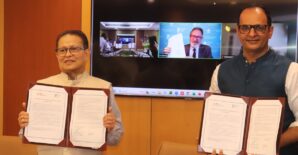
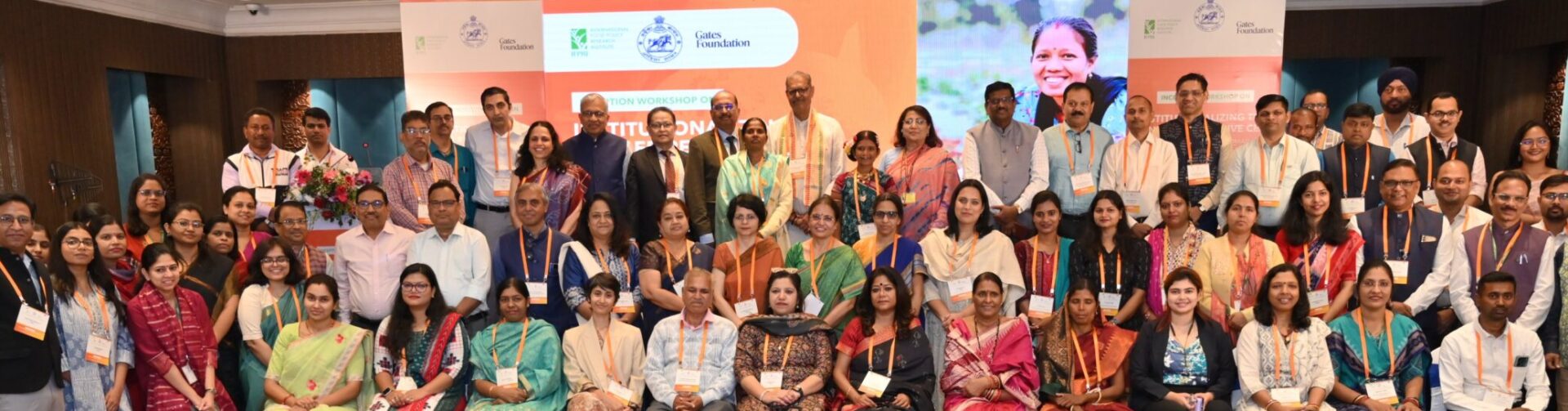
Recognizing the above challenge and many others pertaining to gender in agriculture, the Department of Agriculture and Farmers’ Empowerment (DAFE), Government of Odisha and IFPRI conducted an inception workshop to officially institutionalize the Gender Responsive Cell (GRC) on 13th February 2026 in Bhubaneshwar, Odisha and participants from leading academic institutions, policy and research organizations, eminent bureaucrats and people working at the grassroots all gathered to discuss and contribute towards the framework for GRC. The workshop highlighted several issues ranging from women farmers’ vulnerability during climate change, lack of measurement tools, absence of gender disaggregated data and issues of intersectionality in policy design. Issue of land rights of women farmers emerged as one of the cross-cutting issues across all discussions.
Why is land ownership important for gender responsive policymaking?
Discussions highlighted that male out-migration leaves women managing farms, yet patriarchal land titles exclude them from recognition as farmers. Without formal entitlements, women face a plethora of constraints viz. limited access to government schemes, credit, insurance, and extension services (including climate related information), forced reliance on informal input suppliers and lenders. Further, in times of climate change, there are constraints related to both adaptation and mitigation. Most importantly, land rights reshape power relations both within and outside household. Significant evidence exists linking women’s asset ownership to better child survival (Qian 2008), nutrition, and girls’ education outcomes. The effects of differential land ownership are amplified due to steeply rising land values in population heavy contexts of places like India (Deininger et al., 2011). Land values, thus, inflate the social as well as economic differentiation against women.
Land rights for women are important for securing livelihoods, with land being a major asset and safety net. It can also create incentives to invest in land improvement and sustainable land management with long-term payoffs that would lead women to use land as a financial asset especially as collateral.
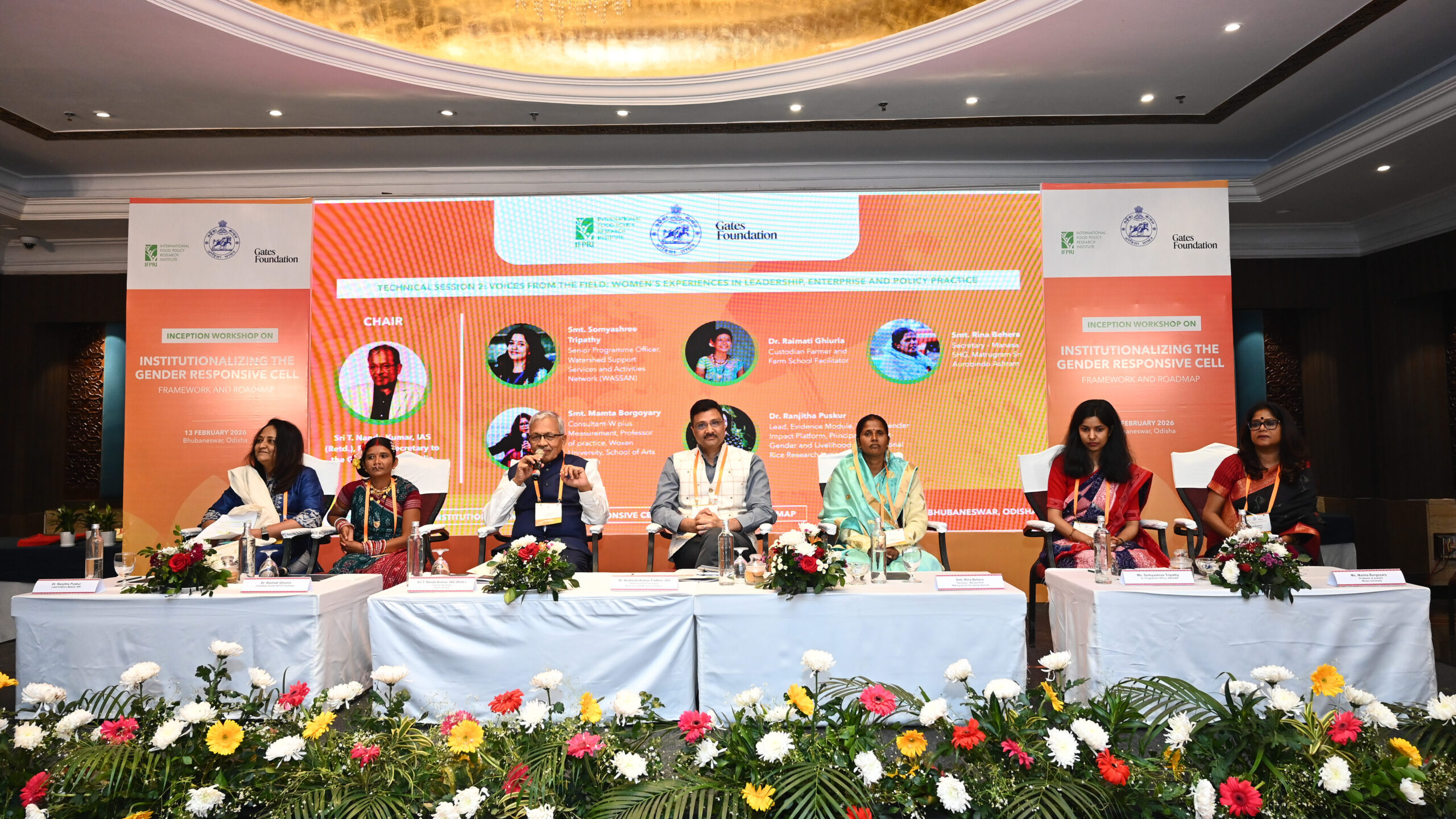
Shri T Nanda Kumar, IAS (Retd.), Former Secretary to the Government of India shared an example of Kudumbashree SHG, emphasizing n the importance of ownership and how it contributes towards financial freedom for women. Dr. Pallavi Choudhuri, Senior Fellow & Deputy Director (NDIC), National Council of Applied Economic Research (NCAER) highlighted the issues of joint ownership of land, and how women often hold unirrigated or less fertile land; stressing the need for gender disaggregated data on land ownership.
What needs to be done to improve land ownership?
In improving the land ownership, there are three main governance areas, based on both local as well as global evidence (Deininger et al., 2011). First, existing rights need to be recognized and effectively enforced. Second, there is a need for provision of comprehensive and current information on rights to interested parties at low cost. Finally, rules of public interest in land including eminent domain need clear information and timely settlements. These are extremely pertinent for Odisha where forest and agricultural land rights intersperse.
Ms. Somabha Mohanty, National lead-Gender Resilience and DRR, UN-Women, also reaffirmed the need to recognize the land rights, especially among the tribal women in Odisha, where tribal identity is deeply tied to land, forest, and water. Ms. Mamata Borgoyary, Consultant-W plus Measurement, Professor of Practice, Woxen University, School of Arts & Design, also shed light on the need for investment in action-oriented plans for tackling issues of land ownership and financial access, suggesting the usage of data measurement tools to bridge the data gaps and build better metrics.
Success Stories – Global Perspective
There are several examples worldwide that can be guidebook for gender responsiveness here. There are robust evidence of joint ownerships that exceeds 40% in countries such as Ethiopia and Uganda while in places like India, it is mostly individual ownership of men, thereby highlighting the role of policy design and legal reform in closing gender gaps. Odisha needs to be applauded for bridging the ownership divide. The state has implemented reforms to grant land titles to women. The Vasundhara scheme has provided homestead land to landless families, with titles often in the woman’s name or jointly with her husband. Forest Rights Act in tribal areas led to secured individual and joint land rights, enhancing the economic security and status of women. These large experiments provide the perfect backdrop for GRC to leverage it for responsive policymaking and implementation.
Several examples from other contexts offer lessons on using land rights as a gateway to scale up gender responsiveness. For e.g., in Rwanda, equal inheritance was combined with piloting and evaluating before scaling up reforms. In Mexico, the Ejido system of communal settlements of land reform comprised legal changes, institutional reform, and a systematic land regularization program (PROCEDE) was supported by setting up appropriate legal architecture. The communal ownership of land with individual rights like in Rwanda, might not be socially and institutionally feasible in our context. Yet the in-built system of rigorous impact evaluation from a gender lens offers lessons for adjustments in the program. Ethiopia’s example of involving elected local institutions could be another suggestion.
Conclusion
The deliberations ended with a forward-looking perspective that the GRC can play an important enabling role in addressing women’s land rights and then leveraging it for responsiveness. GRC could strengthen the evidence base, improve institutional convergence, and ensure that women farmers’ ownership and tenure concerns are systematically reflected in agricultural planning and implementation. By promoting the use of gender-disaggregated data, integrating land-related indicators into monitoring and evaluation systems, and supporting coordination between revenue, agriculture, and women-development institutions, the GRC can help translate existing policy commitments into measurable improvements in women’s recognition, access to services, and economic security.
(With contributions from Vandana Vidhani, Research Analyst, IFPRI)
Arabinda Padhee currently serves as Additional Chief Secretary to the Government, Revenue and Disaster Management Department, Government of Odisha, Devesh Roy is a Senior Research Fellow and Mamata Pradhan is a Research Coordinator with IFPRI. Opinions are the authors’.