ODISHA LAUNCHES FIRST-OF-ITS-KIND GENDER RESPONSIVE CELL (GRC) TO EMPOWER WOMEN FARMERS
Odisha’s Deputy Chief Ministers Inaugurate Gender Responsive Cell to Strengthen Inclusive Agricultural Governance: A pioneering unit within the DAFE, developed in collaboration with IFPRI, to embed gender equity into agricultural policy, services, and outcomes for women farmers.
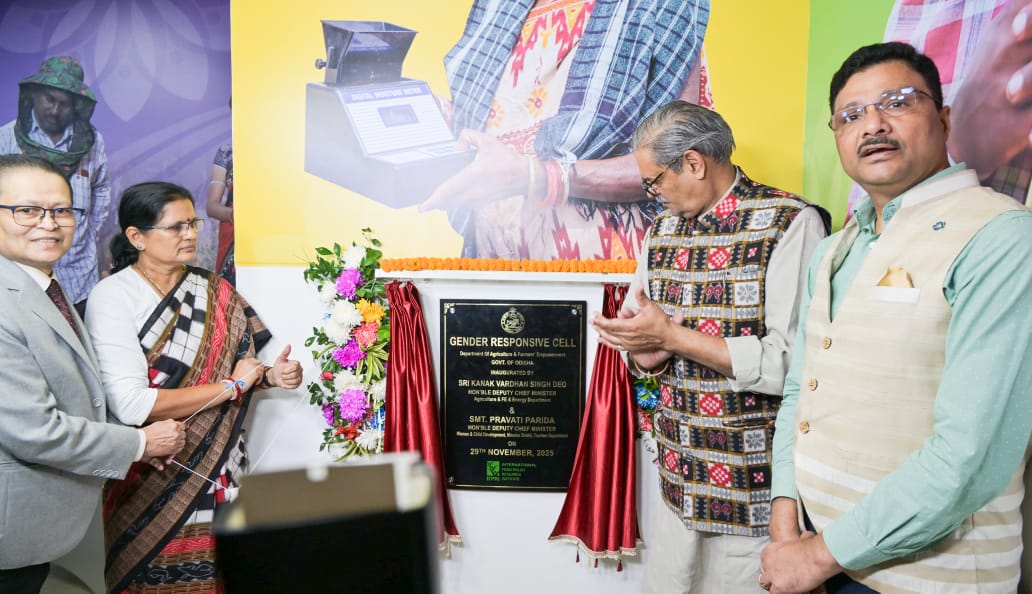
November 29, Bhubaneswar: The Government of Odisha inaugurated the Gender Responsive Cell (GRC) within the Department of Agriculture & Farmers’ Empowerment (DAFE), marking a significant step toward embedding gender equity in agricultural governance. The Cell was jointly inaugurated at Krushi Bhawan by Hon’ble Deputy Chief Ministers Shri Kanak Vardhan Singh Deo and Smt. Pravati Parida, underscoring the State’s commitment to advancing women-led development and strengthening inclusive systems.
Speaking at the launch, Deputy Chief Minister Shri Kanak Vardhan Singh Deo emphasized that the GRC reflects Odisha’s continued focus on progressive and inclusive agricultural reforms. “Odisha has always championed progressive agricultural reforms, and the launch of this Gender Responsive Cell reflects our resolve to make agricultural governance more inclusive, evidence-led, and responsive to the needs of women farmers. Women form a significant share of our agricultural workforce, and ensuring they have equitable access to schemes, technologies, and markets is central to strengthening our food systems. The GRC will help us generate the insights needed to design and deliver better-targeted services and improve outcomes on the ground. We are grateful to IFPRI for their support to the initiatives of the Agriculture Department, and I hope the vision we have come together to achieve shall be accomplished in total.”
Deputy Chief Minister Smt. Pravati Parida highlighted the timeliness of the initiative as Odisha enters a year of global recognition for women in agriculture. “It is fitting that we begin today as we are about to welcome the UN International Year of Women Farmers 2026 and celebrate the strength, resilience, and enterprise of women. Through programs like PM-KISAN and Drone Didi, we see Nari Shakti as the driving force of the future. When women are empowered, society progresses and the nation marches forward. Odisha is at the forefront of this women-led transformative movement. Nearly 70 lakh Lakhpati Didis are at the center of agricultural transformation, especially in millet farming in our State. Our Self Help Groups run over 300 millet processing units, and over 7 lakh women are engaged in millet production, processing, and value-added products. Women will be at the heart of our policy planning, implementation, and evaluation, and in 2036’s Viksit Odisha, women will be leading from the front. Empowered Nari Shakti will be realized in our fields, communities, and across our State, and the GRC will be a foundation for this new era.”
Conceptualized as an innovative institutional mechanism within DAFE, the GRC aims to make agriculture more inclusive by systematically integrating gender considerations into planning, design, budgeting, service delivery, and monitoring. The Cell will also strengthen convergence with institutions such as ICAR–CIWA and extend targeted support to women farmers by improving and tailoring extension services.
Principal Secretary Dr. Arabinda Kumar Padhee outlined the Cell’s mandate and importance for evidence-driven policy. “Through the Gender Responsive Cell, we want Odisha to show the way to the world as we approach the UN International Year of Women Farmers in 2026. Our aim is to strengthen convergence with institutions like ICAR–CIWA and expand the reach of our extension services so that more women farmers benefit from targeted support. The GRC will play a crucial role in developing and maintaining a comprehensive gender dashboard by drawing on all our departmental MIS systems. This will give us a robust evidence base to design, implement, evaluate, and continuously improve women-centric modules, tools, implements, and services that support their livelihoods. The Cell will also have the mandate to produce policy briefs, annual reports, and gender papers that will help disseminate insights and promote knowledge sharing across the ecosystem. By grounding our decisions in data and evidence, the GRC will help ensure that our efforts lead to more equitable and impactful outcomes for women farmers across Odisha.”
The GRC will function as both a technical hub and a knowledge unit, generating actionable evidence for policy assessments, supporting gender-responsive budgeting, building capacity across the department, and ensuring that women’s needs are reflected in the State’s agricultural planning. Over time, the Cell aims to improve access to schemes, resources, technologies, and markets for the 2.8 million women small-scale producers across the State while contributing to Odisha’s longer-term aspiration of establishing a Center for Women-Led Development.
IFPRI, which is supporting DAFE in operationalizing the Cell, reaffirmed its commitment to the State’s broader agenda of integrating gender, climate, and nutrition concerns into agricultural systems. Dr. Shahidur Rashid, IFPRI’s South Asia Regional Director, noted: “Odisha’s decision to institutionalize a Gender Responsive Cell reflects a forward-looking commitment to evidence, inclusion, and resilience. IFPRI is honored to be a part of this pioneering effort – this journey for Odisha. The GRC will enable stronger data systems and gender-responsive policy design, ensuring that climate, gender, and nutrition considerations come together to shape agricultural transformation. The insights generated here will benefit not only the State but also national and global policy communities working toward more inclusive food systems.”
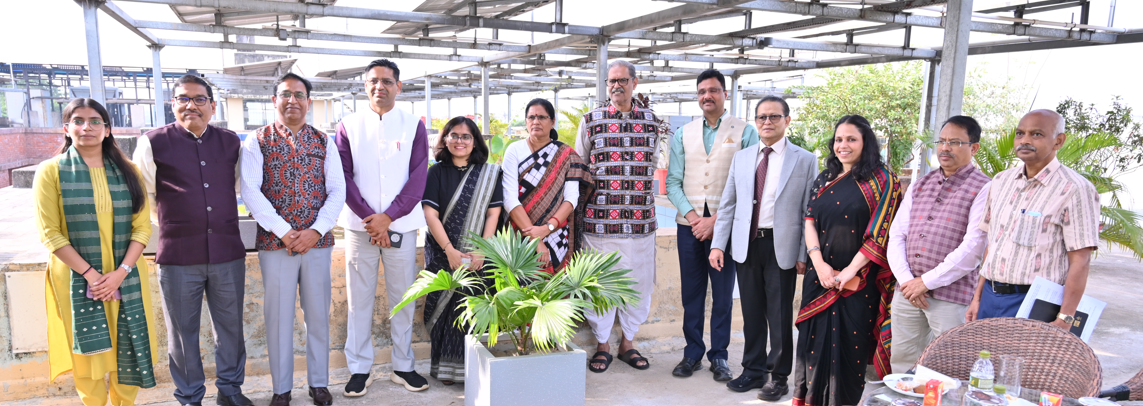
The inauguration was attended by senior State officials, technical experts, development partners, and representatives of women’s groups, who welcomed the launch as a major step toward building agricultural systems that are more equitable, climate-resilient, and future-ready.
For more information, please contact Anisha Mohan at a.mohan@cgiar.org.